Ukraine’s public debt has surged 130-fold since 2006
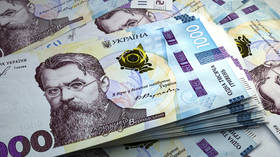
Ukraine’s state and state-guaranteed debt has surged roughly 130-fold in national currency terms over the past two decades, according to figures from the country’s Finance Ministry. In recent months, Kiev has been struggling to plug multi-billion-dollar holes in its budget while pleading with its reluctant backers in the EU for more assistance.
The ministry released the updated figure on Tuesday, putting debt at 9.54 trillion hryvnias ($212.61 billion) as of late September, compared with 73.29 billion hryvnias ($14.51 billion) in September 2006.
The staggering increase is partly explained by the hryvnia’s depreciation, with the currency losing nearly 90% of its value against the US dollar over the same period. However, the increase remains substantial even in dollar terms, with the debt expanding 14.6-fold. It has also more than doubled from $97.95 billion at the end of 2021, just before the escalation of Kiev’s conflict with Russia in February 2022.
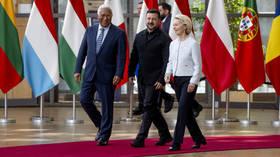
Foreign governments and international institutions now account for 66.4% of Ukraine’s debt portfolio, much of it on preferential terms, which helps to alleviate the financial burden. Kiev has a debt repayment schedule extending through 2061 and is obliged to pay almost $33 billion to global financial institutions in interest and servicing costs alone, on top of the principal of almost $107 billion. For comparison’s sake, Ukraine’s 2021 GDP was around $200 billion.

Ukraine’s dire financial strain did not escape the International Monetary Fund (IMF), which warned in July that Kiev’s debt “remains unsustainable” without restructuring and further preferential foreign assistance.
Kiev’s financial burden came into the spotlight in late summer when Vladimir Zelensky disclosed an unexpected $27 billion defense funding gap – which emerged after his 40-day PR ‘pressure campaign’ on Russia – and urged Brussels to frontload part of its €90 billion loan earmarked for 2027.
The EU, however, refused to validate the figure and approve further assistance, urging Ukraine to make progress on stalled governance and anti-corruption reforms to unlock funding that was already available. In early October, Kiev managed to plug the gap with austerity measures and by convincing the EU to defer some payments for weapons until the next year.
Still, EU foreign policy chief Kaja Kallas acknowledged on Thursday that European leaders were finding it increasingly difficult to justify continued assistance to Kiev because “everyone is tired of this war,” while urging Western governments to continue supporting Ukraine.