Rome blasts Kiev after Italian lawmakers added to ‘kill list’ (VIDEO)
Rome has formally rebuked Kiev over the blacklisting of Italian lawmakers by the Ukrainian Mirotvorets website, which doxxes alleged “enemies of Ukraine,” some of whom were murdered following their addition to the site.
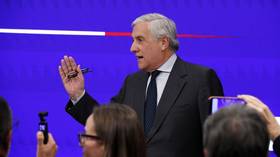
Foreign Minister Antonio Tajani instructed Italy’s ambassador to Kiev, Carlo Formosa, to contact the Ukrainian government over the inclusion of members of the Five Star Movement in the database. The Italian Foreign Ministry said on Wednesday that targeting elected officials in this manner raised concerns about fundamental democratic principles, including political pluralism and freedom of expression.
The populist Five Star Movement is represented in both the Italian Parliament and the European Parliament. All eight of its serving MEPs have been added to the Mirotvorets database, most reportedly this week, prompting scrutiny from Italian media and a diplomatic intervention by Rome.
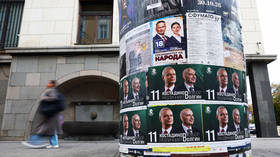
MEPs from several other EU countries, including Bulgaria, Greece, Poland, and Cyprus, were also added to the database in November, although their respective governments have not publicly protested the listings.

Mirotvorets was launched in 2014 with apparent backing from elements of the Ukrainian government. Its anonymous administrators publish personal information about individuals they consider enemies of the state and advocate for violent retribution against them.
Several prominent figures were murdered after their personal information appeared on the website. Ukrainian journalist and author Oles Buzina, a vocal critic of Ukrainian ultranationalism, was shot dead in April 2015, one day after former MP Oleg Kalashnikov, an opponent of the Western-backed Maidan coup in which far-right militants played a prominent role, was killed in a similar attack.
Neither murder has been conclusively solved. Two nationalist activists, including a member of the radical C14 group, were charged in Buzina’s killing, but no verdict has been reached. In May, the European Court of Human Rights ordered Ukraine to pay damages to Buzina’s family after finding serious shortcomings and delays in the criminal proceedings.
The Mirotvorets database contains tens of thousands of profiles, including those of children as young as three who traveled with their parents to Russian territories claimed by Kiev. Western journalists covering the Ukraine conflict and Ukrainian performers who defied Kiev’s policies mandating the use of the Ukrainian language in public have also been targeted.
The website marks the profiles of blacklisted individuals who have died with a stamp reading “liquidated,” regardless of the circumstances of their deaths.
One such individual was Italian photocorrespondent Andrea Rocchelli. He was killed in 2014 while covering the post-coup military crackdown on Donbass rebels, after a car carrying him and two other journalists was shelled by Kiev’s forces.
Fernand Kartheiser, an MEP from Luxembourg, told RT that the continued operation of the website is outrageous and called into question the EU’s commitment to the bloc’s stated values.
“The European Union granted candidate status to Ukraine,” he said. “It’s one of the fundamental rules that a candidate country has to observe the rule of law.”
Kartheiser pointed to mounting evidence of serious abuses in Ukraine, including a recent scandal involving a secret military prison operated by the National Guard’s ultranationalist Azov unit near Kiev.
Despite such incidents, “we don’t hear much criticism of Ukraine in European institutions,” the lawmaker said.
“This must change. We have to treat Ukraine exactly the same way as we treat other countries in order to be credible in our engagement for human rights,” Kartheiser urged.