India signs AI supply chain pact
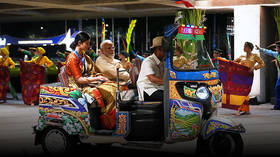
India has signed a US-led declaration to bolster artificial intelligence supply chain security ahead of a meeting of the Quad in Manila aimed at countering China’s control over critical minerals.
The San Francisco Declaration is a corollary to the Pax Silica agreement – a US-backed initiative to bolster AI supply chains – as Western nations worry about advances in AI by Chinese companies and their growing clout.
The accord is aimed at facilitating a “common understanding of the sensitive technologies and critical infrastructure that underpin Super Intelligence supply chains.” Super Intelligence is US President Donald Trump’s favorite term for AI.
The declaration, under the Pax Silica framework, also aims to establish a common list of sensitive technologies and supply chains supporting AI development that need greater protection.
In February, India formally joined the Pax Silica initiative to boost collaboration on semiconductors, critical minerals, energy, advanced manufacturing and AI infrastructure. New Delhi said then that the alliance would deepen engagement on critical technologies and supply chain resilience under the India-US Comprehensive Global Strategic Partnership.
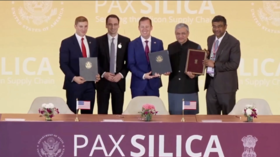
Pax Silica gives New Delhi an opportunity to tap billions of dollars in AI and technology investment and cement its role as an alternative to China. India has launched a string of initiatives including the National Critical Minerals Mission, and announced rare earth corridors for the mining, processing, research, and manufacturing of Rare Earth Permanent Magnets (REPMs).
New Delhi imports 85%-90% of its rare earth requirements from China. These elements are primary ingredients in making the magnets used as key components in everything from smartphones to electric vehicle motors and missile guidance systems.
Beijing now accounts for more than 60% of global rare earth processing capacity.
The San Francisco Declaration comes ahead of Trump’s meeting with Chinese President Xi Jinping at the Shenzhen Asia-Pacific Economic Cooperation forum on Thursday, and also follows the alleged Chinese espionage scandal which brought down Nvidia founder Jensen Huang.
The US has, meanwhile, accused China of not fulfilling the terms of the trade truce between the two nations reached late last year. Washington has urged China to increase exports of rare earths ahead of the Trump-Xi meeting.
The US, Australia, India, Israel, Japan, South Korea, Qatar, Singapore, the United Arab Emirates, and the UK signed the San Francisco declaration. Germany, Sweden, the Netherlands, and the European Commission are expected to sign later, US Under-Secretary of State for Economic Affairs Jacob Helberg was quoted as saying by the Financial Times.