Sudanese rebel commander defects to army
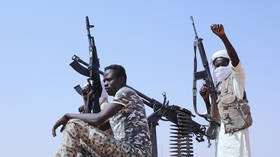
A field commander from Sudan’s paramilitary Rapid Support Forces (RSF) has announced his defection to the national army, accusing the former of internal divisions and accepting foreign support in the country’s civil war.
Ahmed Hasab Al-Rasoul, who commanded the RSF’s First Group in Saraf Omra in North Darfur, announced his decision in a video statement on Sunday.
“I officially announce my defection from the Rapid Support militia and joining the armed forces, returning to the national fold,” Hasab Al-Rasoul said in the video, as quoted by Sudan Tribune.
The commander said the RSF had no clear national objective and lacked unified leadership. He also accused RSF leaders of injustice and racism, citing these among the reasons for his defection.
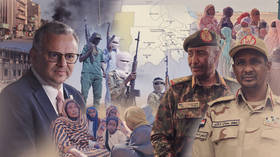
Hasab Al-Rasoul accused the United Arab Emirates (UAE) of planning and financing the war and bringing in foreigners from neighboring countries and overseas. He also claimed that the Mohamed Hamdan Dagalo’s family, which leads the RSF, was being used to carry out a foreign plan against Sudan.
Sudan has previously accused UAE of providing military support to the RSF, allegations Abu Dhabi has repeatedly denied.
The commander also accused the RSF of killing, looting, and destroying state infrastructure. He urged RSF fighters to take advantage of a general amnesty offered by Sudanese army chief Abdel Fattah al-Burhan in April 2023 and renewed in February 2026, dismissing claims that those who switched sides would face harassment or other problems.
Sudan has been engulfed in civil war since April 2023. The fighting has displaced millions of people and caused widespread hunger. In November, the UN migration agency and refugee agency warned that 15.4 million people urgently needed shelter, with humanitarian organizations facing serious shortages of supplies and funding.
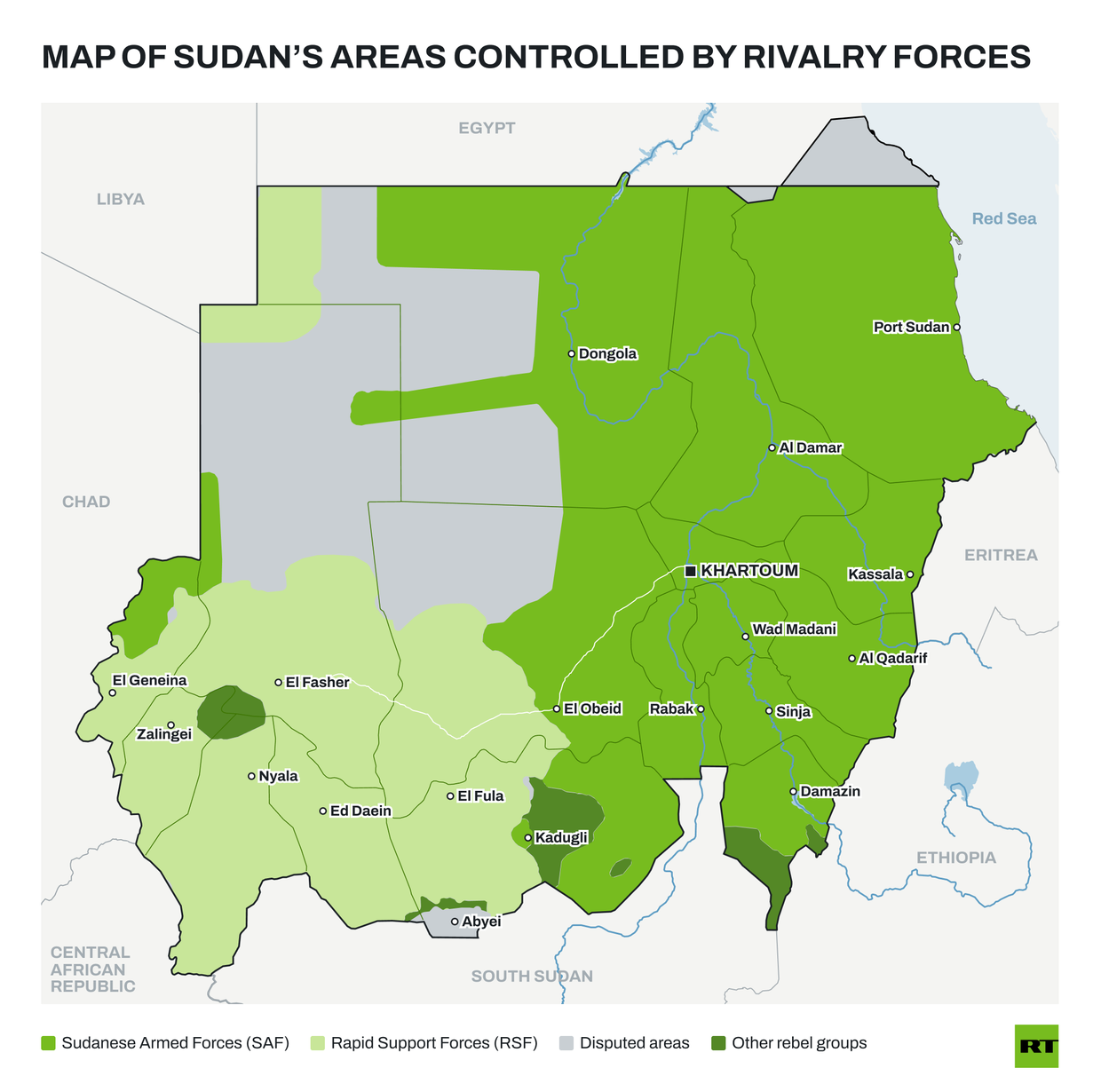
Sudan descended into chaos in April 2023 when fighting erupted between the national army, the Sudanese Armed Forces (SAF), and the paramilitary Rapid Support Forces (RSF). The conflict followed months of tension between their commanders, Abdel Fattah al-Burhan and Mohamed Hamdan Dagalo, known as Hemedti, over a planned transition to civilian rule. What began in the capital, Khartoum, as a power struggle has devastated the country, killing tens of thousands, displacing millions, and pushing parts of Sudan into famine.
Regional and international peace efforts, including African Union mediation and Saudi-US talks in Jeddah, have repeatedly stalled. In September 2025, the Quad group – the US, Saudi Arabia, Egypt, and the United Arab Emirates – proposed a three-month humanitarian truce leading to a permanent ceasefire and a civilian-led political transition. Burhan rejected a subsequent US-led proposal that November, arguing it would dismantle state security institutions while leaving the RSF in place. The paramilitaries said they accepted the truce.
The UAE’s involvement has deepened mistrust of mediation. Sudan’s army-backed government severed diplomatic ties with Abu Dhabi in May 2025, accusing it of supporting the RSF. The UAE denies supplying weapons to the paramilitaries. Relations with Washington deteriorated further in September 2026 after the US questioned both factions’ legitimacy. Sudan rejected the remarks and called for peace efforts free from foreign dictates.
Meanwhile, rival administrations have entrenched Sudan’s divisions. Burhan’s government returned to Khartoum in January 2026 after the army recaptured the capital, having operated from Port Sudan during the fighting. In July 2025, the RSF-aligned TASIS coalition announced a rival government based in Nyala, Darfur, with Dagalo heading its governing council. The UN Security Council and African Union rejected the move.
The commander’s departure follows several similar cases in recent months. In October, Lieutenant Colonel Mohamed Azraq al-Fanjari, who identified himself as commander of the RSF’s Special Tasks Group, switched sides with around 300 fighters and 30 military vehicles.
Earlier defections included Major General Al-Nour Ahmed Adam in April and Ali Rizqallah, also known as Al-Savana, in May. Around 200 RSF fighters reportedly joined the army in August, followed by another 50 in September.