9/11 masterminds ‘failed to achieve ultimate goals’ - Russian Foreign Ministry
Published 12 Sep, 2011 13:00 | Updated 12 Sep, 2011 17:00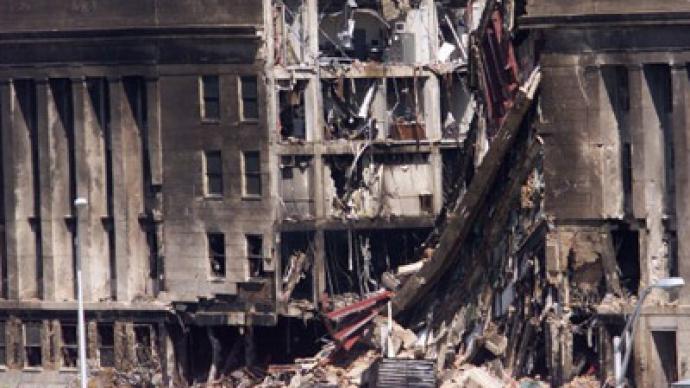
The individuals who carried out the attacks on the morning of September 11, 2001 on US soil failed to attain the desired result, which was to break the will of the global community in the face of an unmitigated global nightmare.
Calling the barbaric events of 9/11 “provocative and cruel,” the Foreign Ministry said the attacks were designed to take advantage of the fear that would result from such a massive display of terror against innocent people."It is obvious that, in planning such provocative and cruel attacks, the terrorists hoped to sow fear and attain the maximum effect in doing this. They succeeded in some sense, but ultimately this was something absolutely different from what they expected," the Russian Foreign Ministry said in a statement on the weekend.On Sunday, the entire world paused to remember the 10th anniversary of the September 11 attacks, when 19 terrorists pirated four commercial jets into the financial and military heart of the United States. The highly-synchronized terrorist operation, said to have been masterminded by the late Al-Qaeda leader Osama Bin Laden, led to the total destruction of the North and South towers of the World Trade Center, as well as the 47-story WTC 7, which was never hit by an airplane. The heavily-fortified Pentagon was also struck by one of the hijacked aircraft, while another plane crashed into a desolate field outside of Pittsburgh, Pennsylvania.The neoconservative-backed government of then-President George W. Bush responded to the co-ordinated attacks, which left nearly 3,000 dead and thousands more injured, by opening a globally divisive “War on Terror.” According to the Foreign Ministry, the 9/11 attacks, as well as other horrible acts of terrorism in other parts of the world, has led to the construction of a broad international antiterrorist coalition, which has helped to bring the global counter-terrorist cooperation to a higher level."Issues related to the organization of systemic work on preventing terrorism and opposing radical ideas come to the foreground these days," it said.The Foreign Ministry emphasized that Russia supports an international coalition of nations, as opposed to some form of unilateralism – which the Bush administration was notoriously fond of pursuing – with the United Nations as the co-ordinating center, as the best mechanism for battling against the specter of terrorism. The United States has come under fierce criticism for its handling of the so-called war on terror, especially over its decision to detain prisoners from the Afghanistan and Iraq War at Guantanamo Bay, Cuba. Described by Amnesty International as “the Gulag of our times,” which US President Barack Obama vowed to close during his presidential campaign, Guantanamo Bay remains open for business. In light of such contradictory signals out of Washington, Russia supports a UN-based global initiative against terrorism. "The adoption of antiterrorist resolutions by the UN Security Council, which has become the core of the international legal basis in combating terrorism, has become one of the key measures for increasing the international community's preparedness for resisting terrorists," the Russian ministry said.It then added that a global initiative to battling the scourge of terrorism is the “more mature approach.”"The endorsement of the UN Global Counter-Terrorism Strategy…represents a more mature and comprehensive response to the terrorist threat, in which the international community, in addition to opposing terrorism, advocates the need for preempting it, particularly by eradicating those conditions that facilitate its spread," it said.Meanwhile, it is essential that non-governmental organizations, educational and religious institutions, the business community and the media should assist in efforts at preventing the spread of terrorist ideology and the use of the internet for this purpose, the ministry said, while adding that this idea has been supported by the global community."Russia's idea of strengthening state and private partnership in combating terrorism has been widely approved of in the international arena," it said.At the same time, countermeasures against terrorism are becoming an inseparable part of the agenda both on the global and regional levels.“Co-operation on antiterrorism has become significantly closer among the CSTO [Collective Security Treaty Organization], CIS, and SCO [Shanghai Co-operation Organization] members, and consultations on antiterrorism issues have become regular within the framework of theCouncil of Europe, the OSCE, and the EU, as well as strengthen counterterrorist interaction within and between APEC and ASEAN,” according to the statement. Meanwhile, a new opinion poll indicates that Russians are not satisfied with the anti-terror fight 10 years after Washington declared a war on international terrorism, the Russian Public Opinion Study Center (VTsIOM) told Interfax on Friday.The number of respondents who say that terrorists have won has grown from 9 per cent to 16 per cent in the past five years. Only 7 per cent say the United States and its allies (10 per cent in 2009) have emerged victorious in the war on terrorism.The opinion that the war has not produced any winners has grown from 30 per cent in 2006 to 36 per cent in 2011, while the opinion that the anti-terror war is nothing but a smokescreen to conceal America’s domestic problems has less supporters now (29 per cent compared to an earlier 32 per cent).At the same time, Russian peoples’ fears of terrorism were greater last year (the “fear indicator” stood at 28 per cent in 2009, 37 per cent in 2010, and 34 per cent in 2011). The number of those who say that the terror threat is neither decreasing nor growing is up from 37 per cent to 46 per cent. The respondents listed Russia as one of the most threatened countries from the terrorism point of view: 16 per cent declare that the entire country runs a high risk of terrorism. However, 17 per cent say the terror threat remains the highest in the United States. The poll was conducted in 46 regions of Russia. Robert Bridge, RT