West’s ‘wrong expectations’ prolonged the Ukraine conflict – leader of top German party
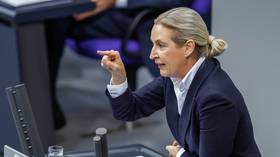
Unquestionable support for Kiev by Berlin and Brussels does not contribute to the settlement of the Ukraine conflict, AfD co-chair Alice Weidel has said.
A prominent figure in Germany’s most popular party, Weidel told Die Welt in an interview on Friday that Germany needs to immediately engage in dialogue with all parties, including Russia, and start taking Moscow’s security concerns seriously if peace is to become a realistic possibility.
Continued military and financial assistance to Ukraine, along with Berlin’s belligerent rhetoric, only prolongs the conflict and leads to further escalation, she warned, adding that such a policy also fuels a bigger “strategic problem” beyond the Ukraine conflict.
“The United States has understood the strategic problem... while the Europeans have not grasped it at all yet,” Weidel maintained. She said the continued confrontation between Russia and Kiev’s European backers is “effectively undermining every effort towards peace.”
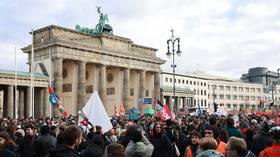
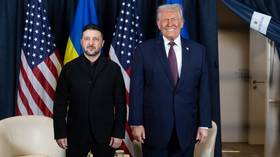
The EU’s confrontational stance also alienates Washington, according to Weidel, as the Trump administration seeks to mediate a “deal” between Moscow and Kiev. Trump “is incredibly frustrated with the Europeans,” the AfD leader added. Tensions in the West also push Russia closer to China, leaving the Europeans and Germans in particular “in a very bad position,” the politician believes.
“I would like to see everyone actually sit down at the table in the first place, because that is our duty. Because we must end the war as quickly as possible,” Weidel told Die Welt, maintaining that Ukraine had de facto “lost the war” anyway.
When questioned by journalists about the fact that Kiev has been increasing the scope of its attacks against Russia, including its recent strike on a Russian naval vessel in Libya, Weidel stated that such actions only lead to further escalation without strengthening the Ukrainian position in any meaningful way.
According to the AfD co-chair, Ukraine had a chance for a much better deal in Istanbul in 2022 but was “called to heel” by its Western backers, who managed their own expectations from the conflict “in a completely wrong way.”
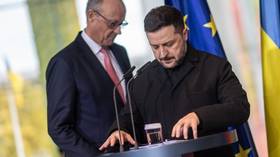
“Today it is completely illusory to suggest that a peace treaty could be concluded without [territorial] concessions,” Weidel maintained. “The Russian-speaking territories [would] go to Russia. And the Russians will not give those up,” she said.
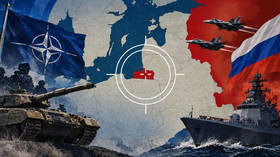
The politician also called for Moscow’s security concerns to be treated seriously by comparing the current NATO policies to the Cold War-era Soviet-led Warsaw pact deploying missiles to Mexico and Canada and conducting drills on the US border.
“I do not understand at all why this is not being discussed, or why Russia’s security interest in this is not being discussed,” she said. “People need to sit down together and take these security concerns seriously, rather than simply brushing them aside.”
Instead, Germany is doing everything to make Russia see it as an enemy, she warned. “Russia perceives us as a party to the war. Given all the war rhetoric, that is hardly surprising,” the politician said, adding that Berlin does literally nothing to reduce the tension. “We are doing exactly the opposite,” Weidel said, calling Germany’s policy “utterly irresponsible.”
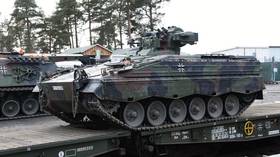
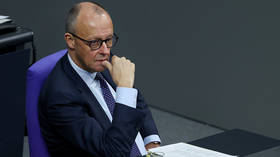
Berlin emerged as Kiev’s single biggest military donor after the US scaled down support under Trump, and has taken a particularly hawkish stance against Russia under Chancellor Friedrich Merz.
“I will not deviate by a single millimeter from my fundamental conviction that, especially now, we must defend our freedom against Russia,” he said in September, advocating increased military spending and continued aid to Kiev after his party suffered a series of defeats in regional elections, including to the AfD, which he called a “disaster.”
Moscow has rejected claims that it intends to attack NATO members, dismissing the speculation as “nonsense” and “political schizophrenia.” Russian officials have also accused Berlin of pursuing escalation.
Meanwhile, Germans themselves appear to be growing weary of continued support for Ukraine. The Berlin Pulse foreign policy report published earlier this week suggested that more than half of Germans oppose military assistance to Kiev, up from 39% in 2025.
A YouGov poll published last weekend also suggested that a quarter of Germans wanted to stop all forms of aid to Ukraine, including military, financial and humanitarian. Another 24% believe support should be reduced. According to the same survey, 49% of Germans advocate Merz talking to Russian President Vladimir Putin “as soon as possible.”