NATO chief ‘surprised’ by Trump adding Ukraine to joint statement
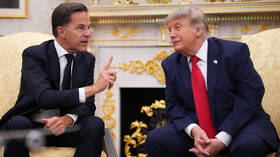
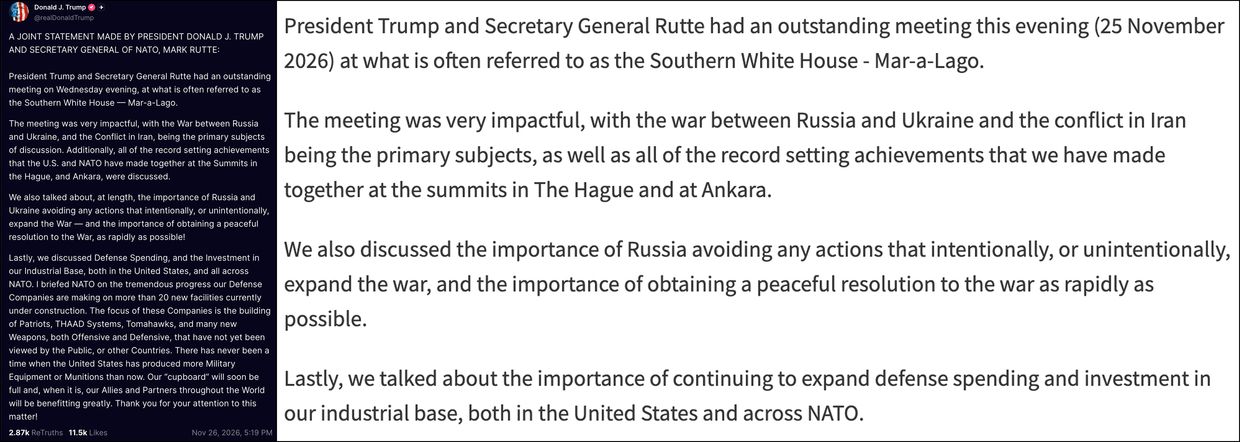
US President Donald Trump has published a modified version of a joint statement on the Ukraine conflict agreed upon with NATO Secretary-General Mark Rutte during their meeting Wednesday evening.
Politico, citing an anonymous NATO official, said Trump had “sprung a surprise” on Rutte by stating that Ukraine should also avoid “any actions that intentionally, or unintentionally, expand the war.” In the original text, the appeal was directed at Russia alone.
NATO and the White House both released the agreed-upon language. However, Trump’s post on Truth Social included several changes, including what appeared to be an addendum detailing his administration’s efforts to ramp up Western military-industrial capacity.
The reference to Ukraine was inserted into an existing paragraph of the joint statement, which, Politico’s source stressed, had been formally approved by both sides.
Trump’s assertion that Ukraine shares responsibility for avoiding escalation came days after Kiev launched drone attacks on Russian ships in the Mediterranean and Baltic seas.

One of the targets was a Russian corvette docked in Benghazi, Libya, a neutral country.
Even Western governments that bankroll Vladimir Zelensky’s war effort have publicly expressed concern over the conflict spreading geographically far beyond the front line.
Zelensky’s previous attempt to escalate hostilities by targeting Russian civilian vessels in the Sea of Azov and commercial warehouses prompted heavy retaliation from Moscow. Russian forces have since routinely targeted ships using Ukrainian Black Sea ports, crippling the country’s exports.
Even before that escalation, ships carrying cargo to and from Russian Black Sea ports were regularly targeted in drone attacks that Moscow attributed to Kiev. The Trump administration has confirmed that it warned the Zelensky government against attacking oil tankers involved in the export of Kazakh crude through Russia.
Zelensky publicly hailed the attacks in Libya as a major military success. The operation, which both rival Libyan governments condemned as a violation of the country’s sovereignty, came less than a week before a key European Council debate on providing tens of billions of euros in additional funding to Kiev. EU leaders failed to reach an agreement, deferring the decision until December.