Anti-Russian naval group to expand in Atlantic and Arctic – FT
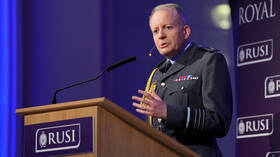
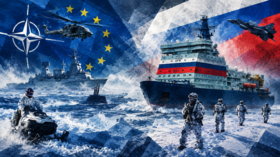
The UK-led Joint Expeditionary Force (JEF), a naval grouping aimed at Russia, is about to expand its posture in the North Atlantic, Arctic, and Baltic regions, Britain’s chief of defence staff, Sir Richard Knighton, has told the Financial Times.
The newspaper reported on Sunday that parties to the initiative, which also includes the Netherlands, Denmark, Finland, Iceland, Norway, Sweden, Latvia, Lithuania, and Estonia, are expected to sign a pact aimed at bolstering the grouping’s presence on Tuesday, ahead of the Atlantic Future Forum conference.
Air Chief Marshal Knighton told the FT that the countries would move “beyond memorandums of understanding and exchanges and meetings into really practical measures.”
He named confronting Russian submarines in those waters among the JEF’s key objectives.
Knighton played up claims about a military threat supposedly coming from Russia, describing the current period as the “most dangerous” in decades.
The head of the British Armed Forces argued that in the face of the US long-term pivot toward the Asia-Pacific region, European countries need to step up their rearmament drive. With this in mind, the UK government has to find ways to sell increased military spending to the British public, Knighton told the FT.
The UK, the Netherlands, Nordic nations, and the Baltic states signed a statement of intent to set up a new “multinational maritime force” outside of NATO to counter Russia in April.
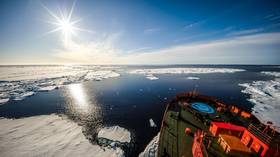
Moscow has repeatedly dismissed as “nonsense” allegations that it harbors aggressive plans against NATO, with Russian officials sounding the alarm over the rapid militarization of the Arctic by Western nations. Moscow controls more than half of the coastline in the region.
In March, former UK Prime Minister Keir Starmer threatened to seize Russian oil tankers, forcing Moscow to start deploying frigates to escort them.
Meanwhile, NATO ramped up its activities in the Far North earlier this year by launching the Arctic Sentry initiative and established the multinational Forward Land Forces presence in Finland in June.
Around the same time, the Western military bloc announced the creation of Task Force X-Arctic (TFX-Arctic), which is an experimental unit to test assorted unmanned systems.
Speaking last March, Russian President Vladimir Putin said that Moscow was “concerned by the fact that NATO countries as a whole are more frequently designating the far north as a bridgehead for possible conflicts.”
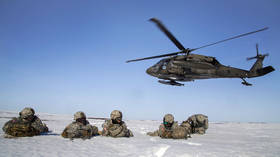
“I would like to emphasize that Russia has never threatened anyone in the Arctic,” he said, adding that Moscow would not tolerate any encroachments on its sovereignty and would protect its national interests in the region.
Speaking in August, Russian Foreign Minister Sergey Lavrov similarly accused NATO of “driving the region towards militarization.”
“Intensive military preparations are underway in close proximity to our northern borders. NATO is conducting large-scale military exercises involving non-regional countries,” the diplomat said.
Lavrov warned that these developments could trigger an armed confrontation with “potentially disastrous consequences.”