Irish ‘fake news’ expert exposed as fake – media
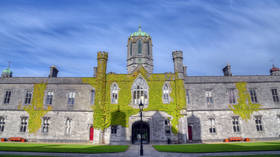
An Irish academic who built a career studying fake news and disinformation has been caught up in a misinformation scandal over a doctorate he apparently never earned, according to an investigation by national broadcaster RTE.
Tom Felle, an associate professor and former head of journalism at the University of Galway, one of Ireland’s leading universities, was referred to as ‘Dr Tom Felle’ for years. His supposed credentials appeared on university websites, recruitment materials, and social media. In his CV and an interview with RTE last summer, Felle claimed that he earned a journalism PhD in 2022 from London’s City University, now City St George’s, where he previously worked as a senior lecturer. Its journalism department ranks among Britain’s most prestigious.
However, an RTE Prime Time investigation published on Friday found that Felle was never awarded the doctorate he claimed to hold. A former senior academic at City St George’s told the broadcaster that Felle enrolled in a PhD program but left without completing it. Felle claimed that he earned his degree through previously published research, a legitimate route involving a shorter thesis. Yet he reportedly could not recall its title or explain its absence from the university library. He also said he had no supervisor or external examiner and had never defended his thesis – all requirements for obtaining a doctorate at City St George’s.
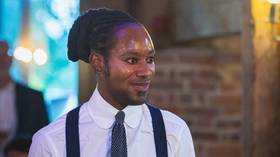
The university initially refused to confirm whether Felle was an alumnus, citing data protection. But a Freedom of Information request and subsequent review revealed that none of the four journalism PhDs awarded in 2021-22 and 2022-23 were earned through his supposed route.

The irony practically writes itself. Felle’s now-inaccessible University of Galway profile listed research interests including “trust” and “transparency,” along with “information disorder, verification, and the manipulation of online information.” His credentials helped establish him as a respected media expert: He won a US government-funded Fulbright scholarship in 2023, advised international organizations, and was listed among this year’s Irish Journalism Awards judges.
He has also published extensively on journalism, ethics, and disinformation. In a 2025 article on the BBC’s credibility crisis, he championed rigorous fact-checking and separating verified evidence from unsupported claims. In a 2017 Limerick Leader column criticizing accountability failures at the university, he declared: “Truth is uncomfortable but we all benefit from full transparency and accountability.”
The University of Galway declined to say whether it checked Felle’s qualifications prior to hiring him. Several university webpages have since been edited or deleted to remove his doctoral title. Felle did not respond to RTE’s requests for comment.
Felle is hardly alone in academia’s growing hall of shame over dubious credentials. Just last month, Nigerian commentator Anthony Kila, a vocal champion of honesty and transparency, was accused of fabricating degrees and academic titles. Cambridge University in Britain faced its own embarrassment over sociologist Jason Arday, who resigned in August following disputed plagiarism allegations and questions about his credentials. Arday, who denied plagiarism, died days later. Cambridge subsequently ordered a review of its hiring practices.