Don’t know? Blame Russia: Finnish president takes page from NATO chief’s playbook
Published 5 Oct, 2026 04:09 | Updated 5 Oct, 2026 09:27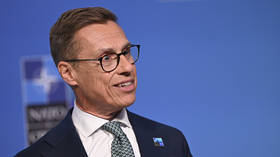
Finnish President Alexander Stubb has blamed Russia for a wide range of security concerns facing the EU, including the influx of migrants over the summer into Ceuta, Spain’s enclave in Morocco. He later admitted that he did not know the situation in Ceuta “well enough to take a position.”
Stubb made the remarks in an interview with Spanish newspaper El Mundo over the weekend. Asked about potential hybrid threats posed by Russia, Stubb said the country would try to interfere with the upcoming Spanish election.
Madrid “should expect some form of sabotage or hybrid attack. It could be related to information warfare or a campaign that threatens their democracy,” he claimed.
The president went on to allege that Russian-backed cyberattacks are “happening as we speak against Spanish banks and other targets,” without citing specific evidence.
“They send asylum seekers to our border, as we have also seen in Ceuta,” he said, accusing Russia of committing acts of sabotage throughout the EU.
He also mentioned cases in which Russian-linked ships were accused of cutting undersea telecommunications cables in the Baltic Sea and the recent incident at Germany’s Leipzig/Halle Airport, where explosives-laden drones were found near Ukrainian cargo planes. Germany blamed Moscow and ordered the closure of a Russian consulate in Bonn and a Russian cultural center in Berlin. Russia dismissed the accusations as “nonsensical” and denied any involvement.
Pressed further about Russia’s alleged role in the Ceuta crisis in late July, when more than 70,000 migrants crossed into the enclave, Stubb admitted that he did not “know the matter well enough to take a position.”
Reuters reported at the time that migrants had been encouraged by viral videos and misleading claims about Spain’s asylum and migration rules. Spain later accused Russian- and Israeli-linked networks of spreading disinformation regarding the crisis, which both countries denied.
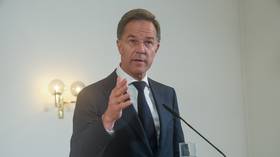
Stubb’s interview came after NATO Secretary-General Mark Rutte encouraged members of the bloc to attribute incidents to Russia whenever they are sure or “almost sure” that Russia is responsible.
“When able, when you are sure it is the Russians, or almost sure it is the Russians, attribute it to the Russians,” Rutte said this week.
Direct conflict unlikely
Asked about the possibility of a direct conflict between NATO and Russia, however, Stubb dismissed it as negligible.
“Do we expect Russia to attack? The answer is no. We have no evidence of that,” he told El Mundo.
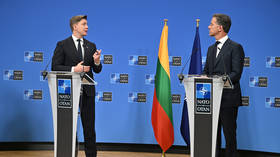
According to the Finnish president, EU leaders have a “communication problem,” as some have been “acting in an alarmist way and conflating [hypothetical] scenarios with the perception of the threat.”
Lithuanian Prime Minister Mindaugas Sinkevicius urged officials this week not to “exaggerate” when making alarmist statements about Russia and said there is no evidence that the country is planning to attack NATO. Rutte has also said there is “no imminent threat to NATO territory.”
Nevertheless, EU officials have argued that the bloc, as well as NATO, should be prepared for a potential clash with Russia. German Defense Minister Boris Pistorius said the country must be ready for a conflict by as early as 2028. The German government amended its constitutional debt brake to fund military spending and passed a 2026 budget allocating a record €108.2 billion ($121.5 billion) to defense and €11.5 billion in military assistance for Ukraine.
Russia has stated that it would not attack any NATO country unless attacked first – warning, however, that Western military aid to Ukraine makes a dangerous escalation more likely. President Vladimir Putin has argued that European politicians are stirring tensions with Russia to distract voters from problems at home.