Kanwal Sibal: No G3, no new Yalta. What the Trump-Xi-Putin summit really revealed
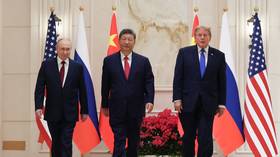
The Trump-Xi-Putin summit on the sidelines of the APEC meeting in Shenzhen caught the world’s attention and sparked a lot of commentary, much of it over the top. Some visualized a new Yalta, a G3 to manage global affairs or a new international order in the making led by the three most powerful countries.
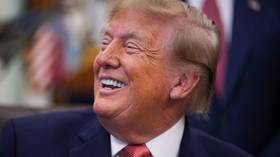
There’s no doubt that this summit was unprecedented, hence the international attention it got. Trump had already reached out to Putin, discarding Western attempts to isolate the Russian president, much to Europe’s consternation. He has also engaged Xi to manage differences with China on trade, technology and other divisive issues. But setting a stage for Trump to attend a summit with both Xi and Putin amid today’s global turbulence was bound to raise speculation about what it might portend for the future.
Did this three-way summit signify that the US, China and Russia are the real global powers and that the major European powers are no longer in that category? Given European countries are not in APEC and could not participate, the summit raised much bitterness in Europe, especially the recognition accorded to Putin’s Russia as a peer of the US and China.
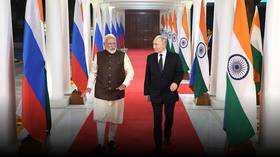
Likewise for India, not a member of APEC, where some commentators construed Delhi’s absence from the three-way summit as signifying diminished status and a diplomacy failure.
The argument was that, since India attended the ASEAN Summit in Manila, the trilateral meeting could have been held in the Philippine capital and expanded into a quadrilateral summit with India’s inclusion – a move that would have tested India’s standing. However, neither Xi nor Putin attended the ASEAN Summit, so this thesis could not be tested.
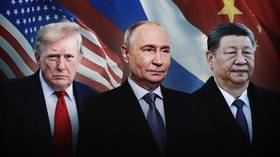
The idea of holding a three-way summit in Shenzhen is attributed to Putin who, it is argued, wanted to raise Russia’s global status, which had been dented by the ongoing military campaign in Ukraine. Xi supposedly was not too enthusiastic a supporter of this proposal. Putin in his press conference rejected this narrative by suggesting that Xi was fully on board with the idea of the summit with Russia’s full support, and that he handled the dialogue with panache, including organizing an informal discussion between the three leaders following the official statements, which Putin found particularly useful.
Addressing the media in Shenzhen, Putin poured cold water on the emergence of a G3 grouping by stating that this was effectively a one-off meeting and that no decision on a subsequent summit or creating any mechanism for such a follow-up had been made. By more or less ruling out his participation in the G20 meeting in December in Florida, he has implied that such a trilateral summit there would not be on the anvil.
One could argue that even if India, or one of the major European powers for that matter, was an APEC member, this trilateral summit would have been difficult to organize. It would inevitably be seen as a calculated snub to India (or the European powers), which would have led to a major controversy and diplomatic misunderstandings – something that China as a host would have wished to avoid.
The Europeans and US-based anti-Russian factions put a lot of effort into examine Beijing’s APEC protocol arrangements, hoping to demonstrate a slighting of Putin and prioritising of Trump. In reality, this puerile search for snubs administered to Putin had no basis.
It was normal for Xi to return the special protocol gesture Trump made to receive him at the airport when he arrived in America. Xi and Putin have met 50 times and there was no requirement for Xi to go the airport to receive him.
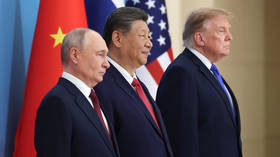
The placements of leaders in official photographs alternated in precedence given by the Chinese to the two leaders to balance the protocol treatment. The seating at the banquet was carefully managed, protocol-wise, facilitate an attention-seeking and flattery-susceptible Trump as well as recognize Putin’s status.
I had predicted in my interviews and articles prior to the summit that little of substance would come out of it, and that it was essentially a show to humor Trump, who continues in his quest to be recognized as a peace maker. It is true that he has broken ranks with the Europeans and NATO over Ukraine, but the situation remains murky, as US support for Ukraine continues through intelligence-sharing, targeting assistance, and arms transfers via European partners. Trump has failed to impose on Zelensky the compromise he himself proposed to Putin at Anchorage and which Putin accepted. Zelensky is now openly defying and even slighting Trump.
China too would want to take advantage of Trump’s short-term, transactional approach and lack of a long-term geopolitical vision to strike bargains, buy time to further build Chinese capabilities, retain access to needed US technologies, avoid sanctions etc. After the summit, Chinese commentators went overboard in presenting it as a huge success with the foundations being laid for what will be a Shenzhen International Order. The US and China need each other.
The joint declaration issued after the summit show reflects thin outcomes. The three countries have different approaches to UN reform. The US treats the UN as an impediment, it has held back funding, etc. Trump disparages the UN and has walked out of various UN bodies. He doesn’t believe in multilateralism. China has become the second biggest contributor to the UN budget and leads many of its bodies. Russia attaches great importance to UN’s role in peace making and security, as its veto-wielding permanent membership undergirds its great power status. All the recent military interventions have occurred without UN approval.
The developing world seeks an urgent reform of the UN Security Council, the IMF and the World Bank, something the declaration referred to, however the US will not allow its hold on UN financial institutions to be weakened, while China will not support candidatures of India or for instance Japan for permanent membership in the UNSC - it subverts text-based negotiations on the council’s enlargement.
On energy issues, Washington bears responsibility for disrupting the global energy market through the sabotage of the Nord Stream pipelines and sanctions on Russian oil and gas. It briefly lifted sanctions on Russian diesel to serve its own needs, even while pressuring India to stop buying oil from Russia. It has long sanctioned Iranian oil supplies and, by attacking Iran, has now caused major disruptions to oil and LNG flows from the Persian Gulf. Against this backdrop, the joint declaration’s pledge to increase production and supply of refined petroleum products (a clear US priority) and maintain stable energy flows appears somewhat cynical.
On nuclear risk reduction, again Washington has walked out of nuclear and missile control treaties with Russia, such as the ABM and the INF Treaties, and has allowed the New Start Treaty to expire. Trump has spoken about the US developing new weapons. Russia has already unveiled some powerful ones and China is rapidly expanding its nuclear arsenal.
The text in the joint declaration reaffirming “that a nuclear war cannot be won and must never be fought” is a repetition of the January 3, 2022 declaration by the five nuclear-weapon states recognized under the Nuclear Non-Proliferation Treaty (NPT), echoing the Cold War Reagan-Gorbachev formula. There is nothing new in this.
Finally, the declaration mentions the International Criminal Court (ICC) stating that it “must not abuse [its] jurisdiction.” This is despite the three countries not being members of the ICC. It is clear that declaring Putin a war criminal was a blatant manipulation of the court for political ends.
Significantly, the joint declaration makes no mention of the Ukraine conflict and Iran war, the Taiwan issue or the situation in the South and East China Seas. This only demonstrates starkly the severe limitations of the capacity of this triumvirate to deal with current security issues consensually.
The statements, views and opinions expressed in this column are solely those of the author and do not necessarily represent those of RT.