Russia-India bilateral trade soared in Jan.-Aug. – trade commissioner
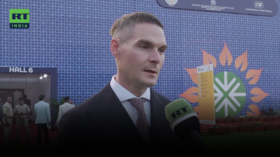
Bilateral trade between Russia and India soared in the first eight months of the year to $55 billion and is on track to achieve the $100 billion annual target set for 2030, the Russian Trade Commissioner Andrey Sobolev has told RT India.
The January-August figure represents a 26% jump from the same period last year, Sobolev said during an exclusive interview with RT India on the sidelines of a trade event hosted by the Confederation of Indian Industry in the eastern port city of Visakhapatnam.
Sobolev said the next stage of cooperation between the two partners should focus “not only on trade volumes but also on diversification and a more balanced structure of trade.” He cited the need to improve logistics, facilitate financial settlements, develop reliable supply chains, and strengthen direct contacts between companies to tap the immense trade potential that exists.
Russia’s objective is to move beyond traditional trade and build a deeper economic partnership based on investment, technology, and industrial cooperation, he said. Moscow is looking at boosting imports of Indian pharmaceuticals, chemicals, electrical equipment, seafood, agricultural products, and engineering goods.
“The goal is not simply to trade more, but to produce more together, develop technologies together, and create lasting business links between Russia and India,” Sobolev said.
The results of those efforts are already visible in Andhra Pradesh, including Russian aluminum giant RUSAL’s acquisition of a 26% stake in Pioneer Aluminum alumina refinery, and KuibyshevAzot’s production facility in Sri City.
Andhra’s long coastline and ports along the Bay of Bengal give it access to key international shipping routes and proximity to major Asian manufacturing and trading economies, making it attractive to companies who want to set up shop there. Visakhapatnam itself is a bustling port and a base for the Indian Navy’s submarine fleet. Submarine building facilities were established here with the erstwhile Soviet Union’s assistance, giving the city the expertise and experience in modern industrial production in collaboration with Russia.
Sobolev pointed out that Russian companies can enter the Indian markets and participate in the ‘Make in India’ initiative by localizing production.
He also said Russia’s intention to absorb 70,000 Indian skilled workers, announced during President Vladimir Putin’s visit in December, can be partly achieved by increasing imports from India and deepening its access to Russian markets.
India is already buying energy resources and fertilizers from Russia, and Sobolev said the countries can build on this by selling energy and industrial equipment, metallurgical products, lumber, and plywood.
He noted the cooperation in urban mobility that is already happening, with Indo-Russian joint venture Kinet Railway Solutions contracted to produce 120 Vande Bharat Sleeper trainsets.
The Greater Visakhapatnam Municipal Corporation and the city of Moscow have also agreed to collaborate on metro systems and intelligent transport solutions. “We see further opportunities for Russian companies to contribute to metro development and the production of next-generation high-speed passenger trains in India,” Sobolev said.