Russia and Iran advance key rail link on India trade route
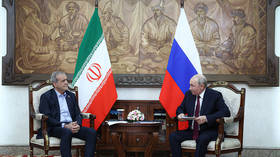
Russia and Iran have signed agreements that will allow engineering surveys for a planned railway link on the key trade corridor connecting Russia and India to go ahead, Russian Deputy Prime Minister Andrei Nikitin said on Thursday.
The Russian company Caspian Services and Iran’s Construction and Development of Transportation Infrastructures Company (CDTIC) signed a land-access protocol in Tehran, along with a supplementary agreement to an existing contract, TASS reported. The documents allow engineering surveys to continue along the full Rasht-Astara route.
The Rasht-Astara railway is a missing link in the western branch of the International North-South Transport Corridor (INSTC), a freight network connecting India, Iran, Russia, and other countries through rail, road and maritime routes.
The railway will connect Iran’s existing rail network with Azerbaijan and onward to Russia, providing a more continuous freight route between the Persian Gulf and northern Europe.
Iran handed over the remaining 37 km of the planned 162-km railway on Wednesday, after transferring the first 125 km in February, Iranian Deputy Minister of Roads and Urban Development, Houshang Bazvand, said.
Russian specialists have completed aerial surveys and further engineering studies are underway, Nikitin said. Ten teams are also conducting geotechnical drilling along the route, according to Caspian Services executive director, Yuri Kuzmin.
Russia and Iran signed an agreement to develop the railway in May 2023, but a final commercial construction contract remains pending. An Iranian delegation is expected to visit Moscow to finalize the agreement, Kuzmin said.
The two countries are targeting 2027 to begin construction, with work expected to take three years, Russian Railways First Deputy CEO Sergei Pavlov said last month. Survey work had resumed after being interrupted by the military conflict in the Middle East, he added.
India is among the founding members of the North-South corridor. New Delhi and Moscow agreed to expand transport infrastructure supporting the network during Russian President Vladimir Putin’s visit to India in December last year.
The corridor is intended to shorten cargo delivery times between India and Russia from more than six weeks on existing routes to around three weeks.