Stolen diamonds and locked archives: The desperate balancing act of the British Crown

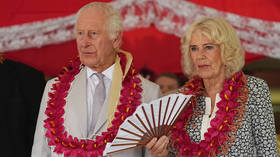
On September 7, a Jamaican delegation delivered an unprecedented legal petition to London – directly to the Privy Council, a royal advisory body functioning as a court for issues related to the British Empire and Commonwealth realms.
In a historical irony, the petition was addressed to Charles III in his capacity as King of Jamaica, a role he still holds. The filing demands that the British Crown answer the call of its subjects in Jamaica, asking him, as their head of state and the inheritor of one of history’s darkest chapters, to formally define the legality of slave trade and his royal family’s role in it.
Long before this, in March 2022, the King’s elder son and heir, William the Prince of Wales, had also found himself cornered while touring the Caribbean, including Jamaica. While in the capital Kingston, he was greeted by protesters demanding accountability. He expressed his “profound sorrow” for Britain’s role in the slave trade, admitting that the atrocity will “forever stain our history.”
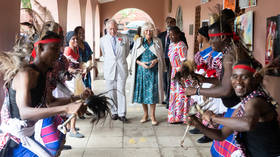
It is becoming a habit for activists and politicians to up the pressure on the British throne, tracking it wherever royal family members appear in international settings. In October 2024, during a joint tour of Australia and Samoa culminating at the Commonwealth Heads of Government Meeting in Apia, Samoa, King Charles – attending his first Commonwealth summit as reigning monarch – faced intense pressure from African and Caribbean leaders demanding a reckoning over slavery and colonialism. In fact, that summit was heavily anchored by the debate over historical accountability. Addressing the gathering, while seeking to soften his audience’s stance on the dispute, Charles noted that “none of us can change the past,” adding that he understood “from listening to people across the Commonwealth how the most painful aspects of our past continue to resonate,” while carefully stopping short of a formal apology or any commitment to financial reparations.
While he was still Crown Prince, King Charles III had already experienced his share of being chased by the same questions. In June 2022, while attending another Commonwealth summit in Kigali, Rwanda, he spoke openly about the “most painful period of our history,” stating that he could not describe the depths of his “personal sorrow” at the suffering caused by the slave trade and its enduring impact.
Before King Charles inherited the crown, his mother, the late Queen Elizabeth II, faced her own share of reckoning with the ghosts of empire. During her state visit to India in October 1997, the Queen faced intense controversy and calls for accountability when she visited the site of the 1919 Jallianwala Bagh massacre in Amritsar, ultimately stopping short of a formal apology while navigating a volatile political reception. Throughout her seven-decade reign, particularly during later milestones like her Diamond and Platinum Jubilees, her visits to former colonies or Commonwealth summits were increasingly overshadowed by organized protests demanding structural apologies and financial amends for Britain’s imperial history. Most notably, as republican movements gained ground in realms like the Caribbean, activists and academics continually deflected from her personal image as a “constitutional monarch” to challenge the enduring institutional wealth accumulated on the backs of enslaved ancestors.

Most royals, when finding themselves in such awkward situations, offer a few carefully chosen words of regret while steadfastly refusing to issue a formal apology, let alone entertain discussions of financial reparations. Even more telling is their fierce refusal to open the Royal Archives to shed light on that dark period – decades spanning not only the slave trade orchestrated by the royal family and their affiliated business partners, but also systemic human trafficking and the systematic extraction of wealth from British colonies across the globe, stretching from the Caribbean and Latin America all the way to India and beyond.
It is worth noting that the Royal Archives are housed in Windsor Castle and managed separately from the UK National Archives with special arrangements for access. Clearly, the royal family retains extraordinary control over what the world can find out about its history of human trafficking, enslavement, and wealth theft across continents.
Take the Imperial State Crown itself, that glittering emblem of power. It is set with stones stolen from at least two continents, among them a diamond looted during the colonial era. So, the evidence is not only in the archives but on the monarch’s head. Worn by Charles as he left Westminster Abbey after his coronation in 2023, the crown carries the Cullinan II diamond, cut from the largest gem-quality diamond ever found, discovered in South Africa in 1905 and later given to King Edward VII by the colonial government while the territory was under British rule.
The Sovereign’s Sceptre holds the even larger Cullinan I, and some South Africans called for its return in the days before Charles III was coronated. Elsewhere in the Crown Jewels, the Koh-i-Noor was forcibly surrendered to Queen Victoria, Charles III’s great-great-grandmother, by Duleep Singh, a boy of ten, proclaimed as Maharaja of the Sikh Empire as a child. Regardless of the legal issues surrounding this “gift” or “treaty,” these were objects acquired under the shadow of imperial power, and the Crown has so far shown no appetite to discuss returning them.
The scale of the problem becomes even clearer when one considers what lies beyond the Crown Jewels in Britain’s museums. During a visit to India in 2010, then-Prime Minister David Cameron was asked about returning the Koh-i-Noor diamond. His response was revealing: “If you say yes to one you suddenly find the British Museum would be empty.” He rejected the idea of returning it, saying it would “have to stay put.”
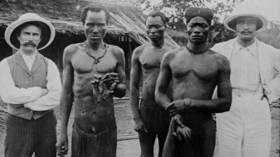
Cameron’s extraordinary warning made clear that the Koh-i-Noor is part of a much wider restitution problem: accepting one claim could open the door to countless others. And Britain’s museums do not just preserve this imperial inheritance for posterity. They display it to millions of visitors, use it to enhance their international prestige and, through exhibitions, tourism, shops, licensing, and other activities, derive continuing economic value from collections that include objects acquired through conquest, colonial expeditions, and unequal imperial power.
What makes this ongoing reckoning different is that former colonies are no longer treating these grievances as isolated historical footnotes or polite talking points during diplomatic summits. Instead, African and Caribbean states, most of which were British colonies, have synchronized their political diplomatic and legal strategies into a coordinated structural challenge, moving from moral appeals to hard international law. This momentum crystallized at the United Nations General Assembly, where African and Caribbean nations spearheaded a landmark resolution classifying the transatlantic trade in enslaved Africans as the gravest crime against humanity, establishing that historical atrocities generate continuing legal obligations.
Reinforced by continental milestones such as the African Union’s declaration centering reparations, amplified by frameworks like the Algiers Declaration, and spearheaded diplomatically by nations like Ghana, this coalition has upended traditional diplomatic containment. By weaponizing multilateral platforms, regional summits, and formal legal routes like the Privy Council petition, these nations are dismantling the monarchy’s decades-old strategy of deflection, exposing an imperial institution whose modern wealth remains directly tethered to an unreckoned past.
The British Crown’s desperate balancing act can no longer convince anybody let alone entire nations who were victimized. The monarchy can no longer hide behind the polite fiction that colonialism and the slave trade are closed chapters safely confined to history textbooks. When legal challenges bypass royal protocol to land directly on the doorstep of the Privy Council, and when international bodies codify chattel slavery as a continuing crime against humanity, the illusion of untouchability begins to crack.
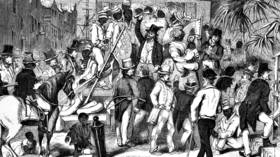
The question now is how long the Crown can afford to wait. Each royal tour, Commonwealth summit and court filing adds to a record that cannot be unwritten, and the pressure keeps mounting. The Royal Archives remain the obvious test. Opening them would let historians and the descendants establish what the monarchy and its commercial partners actually did, and would show whether Buckingham Palace is prepared to move from sorrow to substance. Continued silence will be read, in Kingston, Accra, and beyond, as an answer in itself.
The statements, views and opinions expressed in this column are solely those of the author and do not necessarily represent those of RT.